How to use this guide
Most pages on this site are short. This one is deliberately not, because people who live with jaw pain have usually heard a dozen short explanations already, each from a different specialist, each covering one piece. The guide puts the pieces in one place and in one order.
If you are new to the subject, read parts 02 to 06 first: the anatomy, what goes wrong, the symptoms, and why the problem hides so well. If you have already been diagnosed and want to understand a proposed treatment, go to parts 10 to 14, which cover the measurements, the visits and the orthotic. If someone you love has been in pain for years, part 08 is written for you both. Colleagues will find the work-up in part 12 and the reading list in part 22.
- See a physician first. Before any dental explanation of head, face or neck pain, a physician should rule out the diseases that a physician treats. Nothing in this guide replaces that visit.
- Ask for opinions that are independent of one another. Clinicians who work together tend to agree with one another. Two or three views from people who do not share an office are worth more than five from one hallway.
- Reversible before irreversible. Every step described here starts with something that can be undone. Teeth are reshaped, moved or crowned only when a reversible phase has shown that the new position is worth keeping, and only for a reason of its own.
The joint, in plain words
Put a finger just in front of each ear and open your mouth. What moves under your fingertip is the temporomandibular joint: the point where the lower jaw (the mandible) meets the temporal bone of the skull. There are two, one on each side, and they are unusual among the body’s joints in two ways. First, each joint both rotates and slides: the jaw hinges open, then the rounded head of the lower jaw, the condyle, glides forward and down out of its socket, the fossa. Second, the two joints are joined by one bone, so they can never act alone. Every opening, every chew, every swallow, every word and every breath moves both joints as one unit.
Between the condyle and the fossa sits a small disc of fibrous cartilage. It is a cushion, a spacer and a guide: it keeps bone from rubbing on bone and rides with the condyle as it slides. Ligaments hold the disc in place; muscles move the whole assembly. The muscles that close the jaw, chiefly the masseter at the angle of the jaw and the temporalis at the temple, are among the strongest in the body for their size. The muscles that open it and steady it run under the chin and down the neck. Nerves that serve these muscles also serve the neck, the ears and the face, which is why trouble here is felt in so many places.
The teeth are the last part of the system, and the part that decides where everything stops. When the muscles close the jaw, the teeth meet, and where they meet fixes the position in which the condyles and discs come to rest. Change the teeth, and the resting position of the joints changes with them. That is the whole reason a dentist is involved in a problem that otherwise looks orthopedic.
What goes wrong
Temporomandibular disorders are the medical and dental conditions of the jaw joints, the chewing muscles and the tissues around them. Dr. Chan begins his own explanation with that description, drawn from the National Institutes of Health, and we keep it because it makes an important point: this is a family of conditions, not one disease, and a person may have trouble in the joint, in the muscles, or in both.
In the joint, the disc can slip forward off the condyle. If it pops back into place as the mouth opens, you hear a click. If it does not, the jaw may catch or lock, and the opening becomes short. The joint surfaces can wear and become arthritic, from age, from injury, or from years of loading in the wrong position. Less often, a fracture, an infection or a growth is the cause, which is one more reason the physician’s examination comes first.
In the muscles, the chewing muscles can go into a sustained, painful contraction. Muscle that is held tight for weeks develops tender knots and aches at rest; it also refers pain to places far from the knot itself, so a tight masseter can be felt as an earache and a tight temporalis as a headache. Muscle trouble of this kind is sometimes labeled myofascial pain or even fibromyalgia when it spreads, and because muscles share nerves with the neck and shoulders, those can join in.
In both is the common case. A displaced disc makes the muscles guard the joint; the guarding muscles pull the joint further out of position; the jaw closes on a path the teeth no longer fit, and the teeth, wearing and shifting, lock the whole arrangement in. Which came first is often impossible to say by the time anyone asks. What can be said is where the system is now, and that is what the measurements in part 10 are for.
The symptoms, and why they wander
Signs run from a painless click to a jaw that will not open. Some cases fade on their own in weeks. Others, in Dr. Chan’s words, consume years and money while the person is told that the trouble is stress, or imagination. The list below is long because the condition is. Nobody has all of it; many people have three or four items from different groups and have never been told that they belong together.
- Face and jaw. Pain in the joint, the cheek or the temple. Pain on opening wide or on chewing. Clicking, popping or grating. A jaw that catches, locks, deviates to one side as it opens, or opens less than it used to. Tired or sore jaw muscles in the morning.
- Teeth and bite. Teeth that feel sore without a cavity. A bite that feels wrong, uneven or as if it keeps changing. Clenching by day, grinding by night, chipped edges, worn or sensitive teeth.
- Head. Headaches at the temple, the forehead or the base of the skull. Pressure behind the eyes. Pain that has been called migraine or tension headache without a clear reason.
- Ears. Earache with a normal ear examination. Ringing, fullness, a change in hearing, a sense of stuffiness that feels like a sinus problem but is not.
- Neck and posture. Neck and shoulder pain, a stiff neck, a head carried forward of the shoulders, pain between the shoulder blades, in some cases tingling in the fingers.
- The rest of the body. Dizziness, visual disturbance, poor sleep, and the fatigue and low mood that come with any pain that does not stop.
Symptoms wander because the structures share nerves and because muscles refer pain. A displaced disc does not hurt in the ear, but the muscle guarding it does. Patterns like these are why diagnostic categories in this field have historically been built on signs rather than on causes, a point made in an NIH technology statement that Dr. Chan cites, and why one clinician quoted by him remarked that nearly everyone agrees the head and neck muscles are involved while arguing about the single cause.
Why it is so often missed
Because the symptoms imitate ear disease, sinus disease, headache syndromes and neurological problems, people are sent from one specialty to the next. Each examination is normal for that specialty. After the third or fourth normal result someone suggests that the pain is psychological, and the person stops asking. Dr. Chan describes this route in detail, and the patients who reach our office have usually travelled it.
The scale of the problem is not small. The NIH figure he cites, more than ten million Americans, is a conservative count. Among people who seek care, by his account, about nine in ten are women between puberty and menopause; he points to research by Linda LeResche on hormones and jaw-pain visits, by Peter Waite on an association with mitral valve prolapse, and by Jens Türp on pain that spreads beyond the jaw as reasons to take the pattern seriously rather than to dismiss it.
The second reason the problem is missed is that the usual dental examination is short: range of motion, joint sounds, a look at the teeth, pressing on the muscles, and a history of pain, injury, habits and previous care. That examination is necessary and we do it. It is not sufficient, because none of it is measured, and a problem that is not measured is easy to call normal.
The third reason is the supply of treatments. Dr. Chan counts more than forty-nine different treatments offered for TMJ problems in this country, chosen more often by the clinician’s preference than by proof of safety or benefit, and he is blunt that treatment can make people worse. We agree, and the conclusion we draw from it is in part 01: a physician first, independent opinions, and nothing irreversible until a reversible phase has earned it.
TMJ, TMD, CMD: what to call it
Patients say “TMJ”. Researchers say “TMD”, temporomandibular disorders. Clinicians have used cranio-mandibular dysfunction, temporomandibular joint dysfunction, myofascial pain dysfunction, craniofacial dysfunction and musculoskeletal dysfunction, and the differences are not only cosmetic. Each name decides what is examined.
For complex cases Dr. Chan prefers a long one: musculoskeletal dysfunction of the head and neck resulting in temporomandibular joint dysfunction. The order matters. In nearly all of the difficult cases he has seen, muscle pain and muscle imbalance are present, and the joint trouble is their result as much as their cause. With institutions he goes longer still, cranio-mandibular, neurovasomuscular and cervical dysfunction, so that the skull-to-jaw relationship, the nerves, the blood supply, the muscles and the neck are all written into the diagnosis and none can be left out of the examination.
On this site we use “TMJ” in headings because that is what people search for, and “TMD” where precision matters. Whatever the name, the thing being described is the same: a system of joints, discs, bone, muscles, ligaments, vessels, nerves, teeth and the person’s own state of mind, built to work as one and now working against itself.
How the bite and the muscles get into it
Here is the neuromuscular explanation of the mechanics, as Dr. Chan teaches it. The chewing muscles have a length at which they are most relaxed and most efficient. If the teeth meet in a position that forces the lower jaw to close too far, too far back, or off to one side, the muscles never reach that length. Day after day they work at a disadvantage, and muscle that works at a disadvantage tires, tightens and eventually hurts. Because the jaw muscles share nerve pathways with the muscles of the neck and shoulders, those can follow, and the pain travels into the head, the neck and the back. Later come the clicks and the grating, as the joint is loaded in a position it was not designed for.
What pushes the bite into such a position? Dr. Chan’s list: lost teeth and the drifting that follows; teeth that erupted out of line; wear that has shortened the back teeth; grinding by night and clenching by day; the posture of the tongue; muscle imbalance; chronic mouth breathing, often from a blocked airway or allergy, which in a growing child changes the shape of the arches; arthritis; and injury. Posture belongs on the list twice, because the way the head sits on the neck changes where the lower jaw hangs, and the way the jaw hangs changes the posture of the head.
Two things follow from this account. First, some degree of this dysfunction is common and does not need treatment; symptoms are what bring people in, and the absence of symptoms is a good reason to leave a bite alone. Second, when symptoms are present the question is not whether the bite is “bad”, but where the jaw would rest if the muscles were allowed to relax, and how far that is from where the teeth now hold it. That is a measurable question, and part 10 describes how it is measured.
Stress sits inside this picture rather than outside it. Clenching tracks stress, including the stress we are not aware of and the kind that works through sleep, so a plan sometimes includes counselling, sleep assessment or medical review. Posture sits inside it too, so a plan sometimes includes physical therapy. And the airway sits inside it, so a plan sometimes starts with an ear, nose and throat colleague before any dentistry at all.
When the pain has lasted
Dr. Chan presents, on his own site, an essay by the orthodontist Terrence O’Shaughnessy on the person in long-term pain, and we rework its argument here because every family that has lived with chronic jaw pain will recognise it.
Pain that lasts becomes a disease of its own. People in it are difficult to be around, and so clinicians, families and even their lawyers have tended to push them aside, or to write a prescription that ends the visit. If soft-tissue pain from an injury is still present at six months, something changes: tolerance for pain drops, a loop of frustration and worry sets in and can become depression, symptoms begin to move around the body, and the person withdraws from work and from relationships. Eating and sleeping become efforts. The face and the mouth never get a day off; we use them to speak, eat, swallow and breathe, and so a painful jaw joint takes over daily life in a way a painful knee does not.
Acute pain that is expected to heal is something a person can manage psychologically. Pain that the person believes nobody will treat becomes a disability. Muscles, tendons, ligaments and fascia can keep hurting for years whenever they are loaded, which in the jaw is every few seconds.
None of this means the pain is imaginary. It means the opposite: that it has a physical substrate which is being loaded continuously, and that the longer the loading goes on, the more the nervous system learns it. It also means that treatment of a long-standing case has two patients, the jaw and the person, and that measurable progress in the first is the best medicine we know for the second.
Two schools of thought
Dentists disagree about where the jaw should sit when the teeth meet, and an honest guide has to say so.
Gnathology, the older school, treats the jaw joints as a hinge turning on an axis in the fossa and builds the bite to a position called centric relation, with the condyles seated up and back. Its rules were worked out from the 1930s onward with the mechanical articulators that are still in every dental laboratory; Dr. Chan credits the name to Harvey Stallard of San Diego. He practised that way for years and says it serves well when the joints are healthy and the muscles are quiet. His criticism is that it treats muscle physiology as something that will adapt to whatever the hinge dictates, and that in the hard cases it does not.
Neuromuscular dentistry, from Bernard Jankelson and continued by Robert Jankelson, begins at the other end. It looks for the position in which the muscles are at rest and the joints are unloaded, and then asks the teeth to hold that position. Joints, muscles and teeth are meant to be stable together; stability in one bought at the expense of another does not last. Where gnathology reasons from a universal hinge, neuromuscular dentistry records this particular person: the jaw is tracked in six ways, up and down, forward and back, side to side, and in pitch, yaw and roll, so that a strained closing path can be separated from a rested one and the difference measured in millimetres.
Dr. Chan’s historical note is that the functional view was overshadowed for most of the twentieth century because nobody could measure what it claimed, and that the electronic instruments Bernard Jankelson introduced around 1970 are what made it usable in a clinic. Dr. Tetri trained in this tradition with Dr. Chan and practises it. We also read the broader literature, including the position of the National Institute of Dental and Craniofacial Research that irreversible bite changes are not a routine treatment for TMD, and we hold both views in the same way: the neuromuscular position is found and tested with reversible means, and teeth are changed only when that test has been passed and there is a dental reason of their own to change them.
Measuring instead of guessing
When symptoms vary from week to week and earlier treatment has failed, a guess is not good enough. Dr. Chan’s banner line is that computerized diagnostics are the key to success, and the four records below are what he means. They are the records that can be added at Tetri’s Smile when the examination calls for them. Each answers a different question, and none of them diagnoses on its own.
Jaw tracking (computerized mandibular scanning)
A small magnet is attached to the lower front teeth and a light array of sensors is worn on the head. The system follows the jaw’s movement to about a tenth of a millimetre and shows it in three planes. From it we read the freeway space, the small gap between the teeth when the jaw hangs at rest; the path the jaw takes to close, and whether that path is straight or deviates; the swallow; the speed and smoothness of opening; whether the disc is displaced and whether it reduces; and the difference between the position the teeth impose and the position the muscles would choose. One illustration Dr. Chan uses shows a painful closing path about 2.1 millimetres from the physiologic one, and a later recording in which the gap is gone and the person is comfortable.
Surface electromyography (EMG)
Stick-on electrodes record the electrical activity of the chewing muscles: the masseter, the front and back of the temporalis, and the digastric under the chin, on both sides, eight channels in all. At rest, a healthy muscle is almost silent; a muscle in trouble hums. During a clench the two sides should work in balance. EMG separates pain that comes from inside the joint from pain that comes from the muscles around it, shows whether a proposed rest position actually quiets the muscles, and does what fingertips cannot: put a number on it.
Sonography
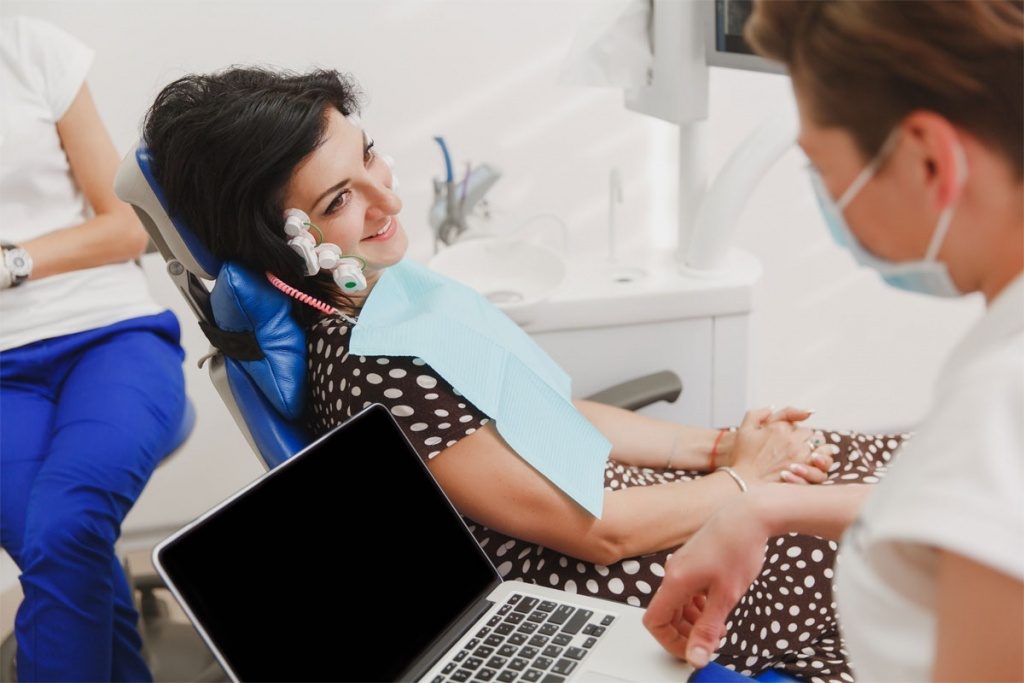
A headset over the joints listens to them. A healthy joint moves silently; a displaced disc or a rough surface makes a vibration that can be timed to the moment in opening or closing when it occurs, and analysed by frequency. The practical purpose is to know the state of the joint before anything is built on it, so that restorations are not made over an unresolved interference.
Low-frequency TENS
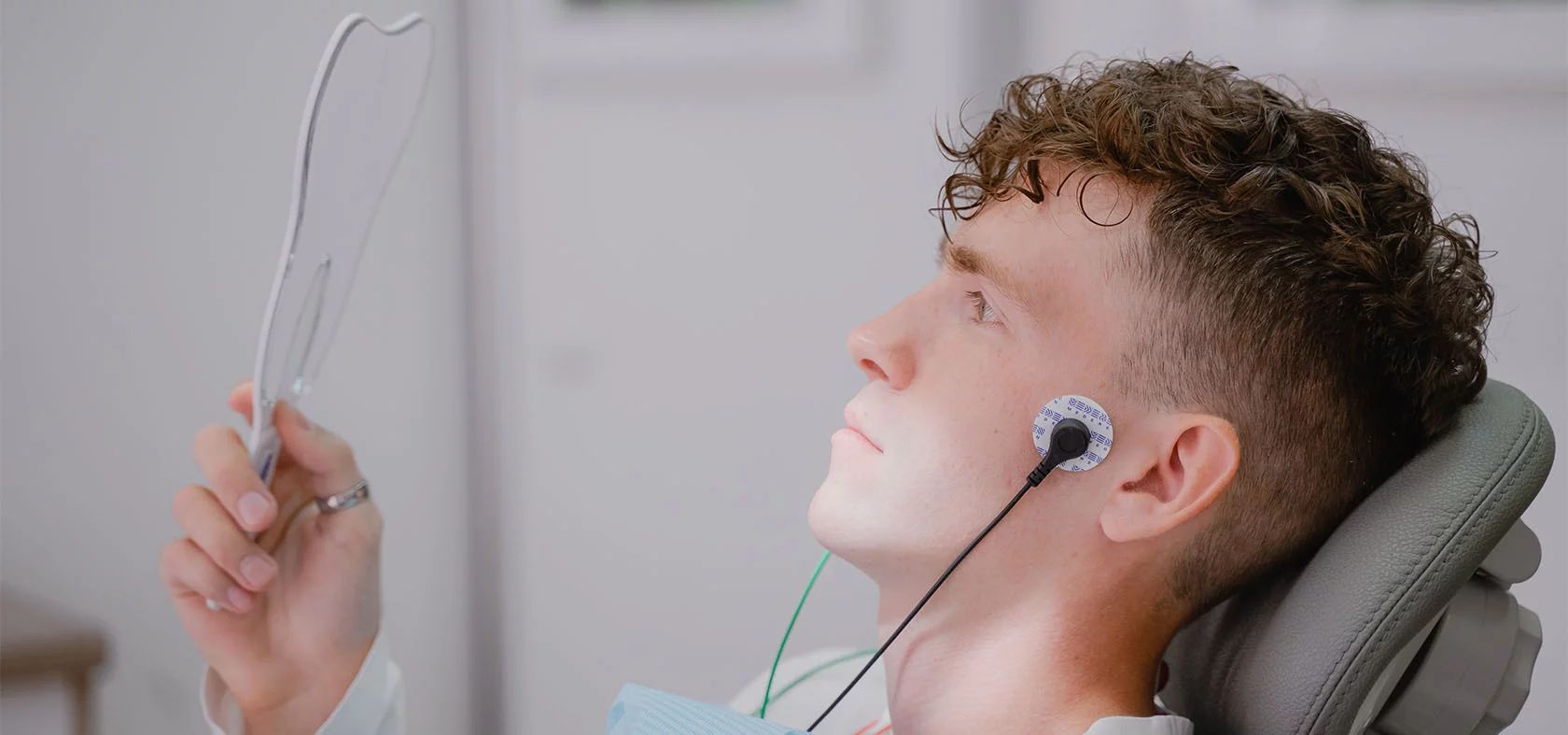
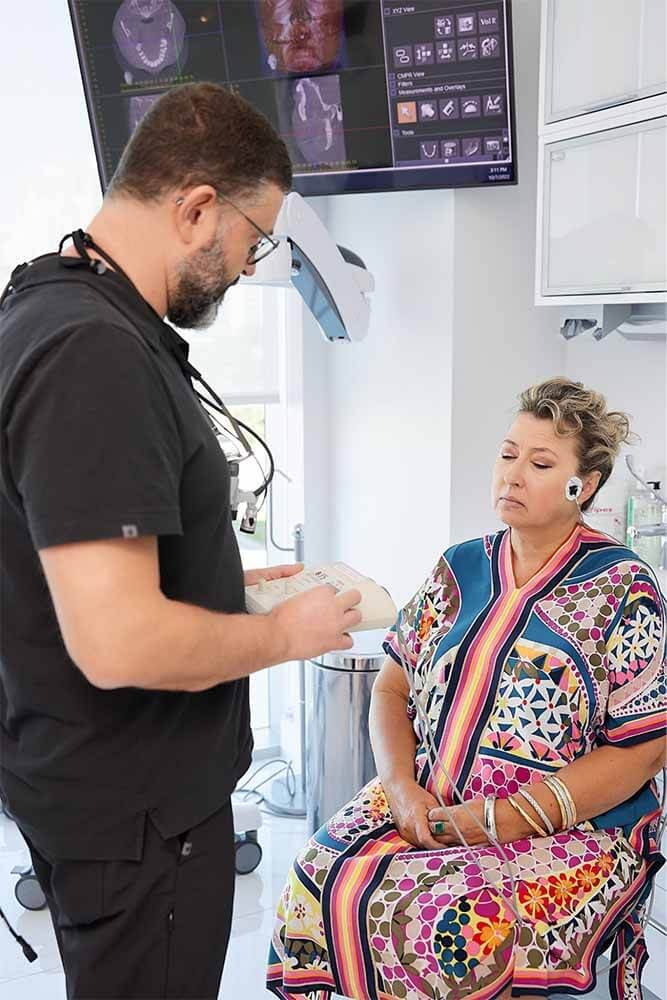
Transcutaneous electrical nerve stimulation at a very low rate, a gentle pulse every second or so delivered through pads near the ear, makes the jaw muscles twitch rhythmically for roughly an hour. The purpose is to relax muscles that have forgotten how to, so that the jaw can be allowed to find its unstrained closing path and that path can be recorded. TENS in this use is a means of reaching a rested state and checking it with EMG; it is not a test and not, on its own, a treatment.
Dr. Chan reports that these recording devices have been accepted by the American Dental Association’s Council on Scientific Affairs as aids in the management of TMD and cleared by the FDA for that purpose, and he keeps a literature list of several hundred papers on their physiology, reliability and use. That list is on his site, cited in part 22. We say what he says about them and what the technology page on this site says: they help us ask better questions, and the answers are read together with the history, the examination and the images.
Imaging, ranked by what it can see
An image is a still picture of a moving system. It answers questions about shape, not about function, and each kind answers a different question.
- Plain films and the panoramic X-ray show the bones cheaply and rule out gross disease. They are a screening tool, not a joint study.
- Tomograms slice through the joint. Dr. Chan prefers corrected tomograms, a series of thin views through the condyle and the fossa that can be repeated over time, for deformity, a growth, osteoarthritis or an old fracture. They do not show soft tissue.
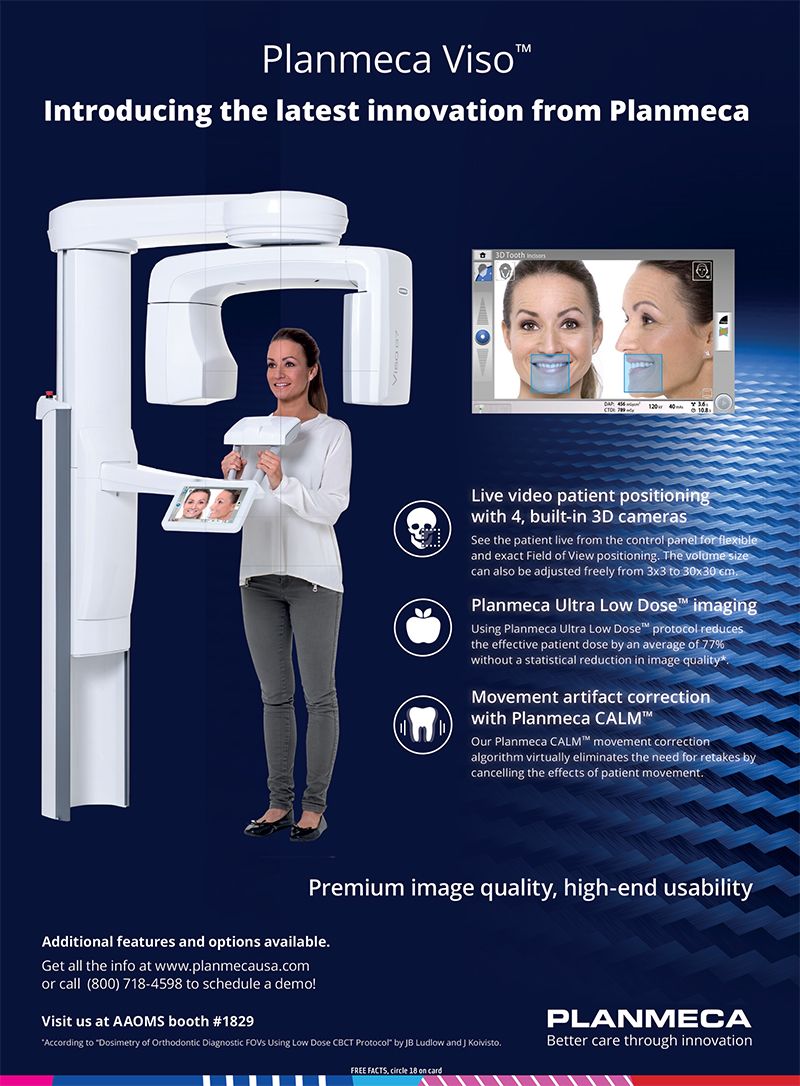
- CBCT, the three-dimensional dental scan, shows bone in every plane at a low dose and is the scan we take in our office when a bone question needs it. It does not show the disc, the ligaments or the muscles well; it is a weak test for the disc.
- MRI is the reference examination for the disc and the other soft tissues of the joint. It uses no radiation and it is arranged by referral.
The rule is the one we use for every scan at Tetri’s Smile: previous images are reviewed first, the field is sized to the question, and a bigger scan is not a better diagnosis. Function, which no still image shows, is what the recordings in part 10 add.
The work-up, visit by visit
Dr. Chan’s office protocol is the clearest description we know of a complete neuromuscular work-up, and we present it here as he teaches it. The times are his; ours vary with the case and some visits are combined. What does not vary is the order.
- Visit one, about an hour. We meet. You describe the problem in your own words. A short examination of the muscles by touch, a first conversation about options, a screening recording of the joint sounds, a request for the images that are needed, and diagnostic casts and photographs of the teeth as they are now.
- Visit two, about three hours. The full history: medical, dental, what every earlier clinician tried and what happened. An examination of the head and neck, including posture, the bite, the joint sounds, the gums, and a review of every image, from the full-mouth series and the panoramic view to joint tomograms, a lateral view of the skull and, where an injury is involved, views of the neck. A record of the teeth as they stand. More talk about options.
- Visit three, about four hours. The functional recordings: jaw movement at rest and in function, before and after TENS; EMG together with jaw tracking; and, at the end, a registration of the rested jaw position, the bite record that the orthotic will be built to. Dr. Chan’s standard set is about ten recordings, each with a job: freeway space, closing path, swallow, muscle activity at rest and in clench, joint sounds, range of motion.
- Visit four, about three hours. The orthotic, built in the laboratory to that registration, is delivered and refined with the recordings and TENS until rest, posture and the relationship between skull and jaw read as they should. Part 13 explains why that takes as long as it does.
- Later visits watch progress, adjust the appliance as the muscles change, and decide, usually at about three months, what comes next.
A harder case gets a separate private consultation between visits two and three, with the models, the images, the photographs and the findings on the table, so that if more than one plan exists the choice is made with everything in view, including questions about materials, technique and cost.
The orthotic phase
An orthotic is a removable appliance, usually worn over the lower teeth, that holds the jaw in the rested position found by the recordings. It is the reversible phase. Nothing about your teeth is changed; take it out and you are where you were. Its purpose is to let the muscles live at their rested length for long enough that they stop hurting, and to prove, before anything permanent is considered, that the position is right.
Fitting it is not a hand-off. Dr. Chan calls the slow neuromuscular approach the key to success, and describes the delivery visit in four passes. First, with the muscles relaxed by TENS, the appliance is adjusted so that it meets the closing path the muscles and joints choose, not the path the old bite imposed. Second, the small interferences that would deflect the jaw during chewing are removed from its surface. Third, another TENS check confirms that the contacts are even. Fourth, the finish: jaw tracking and EMG together, so that a clench on the appliance is balanced side to side at a rested jaw position. He insists that tracking, EMG and TENS are used together; one or two without the third, in his experience, give limited and unpredictable results. The visit takes two to three hours with the dentist and a trained assistant, and a correctly set appliance should feel comfortable, close to a normal rest, by the end of it.
Then the appliance is worn, reviewed and refined as the muscles change, because they do: a muscle that has been short for ten years lengthens over weeks, and the position recorded on day one is rarely the position of month three. If, after about three months, the symptoms have quieted and the recordings are stable, the position has earned the right to be discussed as permanent. If they have not, the appliance has still told us something important at no cost to the teeth, and the plan changes.
After the orthotic: holding the position
A position that has proved itself can be held in several ways, and the choice depends on the teeth as much as on the joints.
- Stay in the orthotic. For some people a well-made appliance, worn as agreed and checked, is the whole treatment. There is no rule that phase two must follow.
- Reshape the surfaces that interfere. Where the deflection is small and the teeth are otherwise sound, a careful adjustment of a few contacts can hold the new path. This is irreversible, and it is done only after the appliance has shown where those contacts should be.
- Restore. Where back teeth are worn short, missing or already heavily restored, crowns, onlays or bridges rebuild them to the tested position. Our laboratory, in the same building, makes the trial restorations first, so that you wear the design before anything is final.
- Move the teeth. Orthodontics can bring the teeth to the position the appliance has established, on its own or combined with restorations.
- Replace. Where many back teeth are missing, a partial denture or implant-supported teeth made to the tested position hold it the way natural teeth would.
Dr. Chan’s editorial on the order of things is worth repeating here: source before symptom. People ask for health and rarely realise that an uneven bite matters to it; chronic gum and bone infection, toothache, sensitivity, headache, grinding and loosening teeth can all be tied to how the teeth meet, often before there is any pain in the joint. Treating the symptom is common and sometimes right. A plan that treats the source costs less over a lifetime and keeps more tooth, bone and gum, and teeth, he reminds his readers, are living.
The toothache that is not the tooth
Pain in the mouth has four possible homes: the tooth, the gum, the bone, and the chewing muscles. Dr. Chan’s point, from decades of seeing people after their third root canal on the same side, is that a bite which overloads a tooth can produce every sign of a tooth problem, sensitivity to cold and sweet, throbbing, pain that comes and goes, with no cavity and a normal nerve, and that a sore chewing muscle can be felt as a row of aching teeth.
So before a root canal, a filling, an adjustment or an appliance, the question is which of the four is driving the pain. The answer comes from the examination, and sometimes from the recordings: a tooth that hurts only when the jaw closes on a deflected path is telling us about the path. Treating only the tooth in that situation leaves the cause in place and adds one more irreversible procedure to a mouth that did not need it.
Growing jaws: children and functional orthodontics
Much of adult TMJ trouble has its start in the shape of the jaws, and that shape is set early. Dr. Chan cites figures that some sign of TMJ dysfunction is already present in thirty to sixty percent of orthodontic patients, that about seventy percent of children with a mix of baby and adult teeth have a malocclusion, that around ninety percent of the face has formed by the age of twelve, and, from the Burlington Growth Study, that three quarters of twelve-year-olds had some malocclusion and that untreated malocclusion tends to worsen. His conclusion is that waiting until every adult tooth is in is waiting too long.
Functional jaw orthopedics treats the posture of the jaws, the relation of the teeth, the balance of the muscles and the posture of the head and neck together, and looks early for narrow arches, airway and tongue problems, and a lower jaw that sits too far back. Phase one, while the child is still growing and still has baby teeth, uses removable functional appliances to widen the arches, to bring a retruded lower jaw forward, and to deal with thumb and finger habits, tongue thrust, mouth breathing and snoring. Phase two, later, finishes the position of the teeth on the base that phase one has built. Early skeletal change, in this view, is easier and more stable than later camouflage.
Dr. Chan contrasts this with what he calls retractive orthodontics: straight teeth as the goal, extraction of four healthy premolars to make room, and the assumption that the muscles and joints will adapt. The possible price he lists is a high palate, breathing trouble, a narrow arch, gum recession, unstable teeth and lifetime retainers, a poor vertical dimension, and jaw or neck pain, with surgery as the usual answer for a receding lower jaw. He calls routine premolar extraction a tragedy that is still taught, notes that women are affected more often, and asks the profession to develop arches instead. One case he describes is a woman of twenty-nine who had been offered jaw surgery and chose about a year and a half of functional appliances and braces instead.
Every orthodontic case in his office is worked up neuromuscularly so that the jaw posture is known before any tooth is moved: screening joint sounds, casts, an orthodontic series of images, photographs, then a presentation of the plan, then a recorded bite and the decision on mechanics, then the appliances. The stated end point is a straight profile, healthy joints and the smile, in that order.
At Tetri’s Smile children are seen on pediatric days from November 2026. If you recognise your child in this part, mouth breathing, snoring, a narrow smile, a lower jaw that seems to sit back, a thumb that will not retire, say so at the first visit. The pediatric dentist and Dr. Tetri will decide together whether growth guidance is the right conversation, and when.
After an injury: whiplash and the jaw
A large share of the hardest cases begin with trauma: a rear-end collision, a fall, a blow to the face, a jaw forced open or sideways. Dr. Chan, who has treated many people hurt in car crashes, makes three points that every injured person should know.
First, early on, the joint may neither hurt nor make a sound. The neck hurts, the head aches, and the jaw seems fine. Because neck trouble and jaw trouble provoke each other, that changes: delay or poor early care brings the click, the jaw and face pain, the difficult chewing, the limited opening and the blocked-ear feeling months later, and by then the complaints have moved far enough from the original injury that nobody connects them. His whiplash list is long: head, neck and shoulder pain, earache, dizziness with or without nausea, ringing in the ears, numbness in the arm or hand, a stiff neck, pressure behind the eye, and changes in vision or hearing.
Second, objective recordings are how conflicting stories get sorted. When an insurer, an employer or a court has to decide whether an injury is real, a measured jaw path, a muscle recording and a joint sound record, taken early and repeated over time, document what a description cannot. Dr. Chan argues from this that TMJ is a medical disorder of the joints rather than a dental matter, and cites a federal appeals decision, Masella v. Blue Cross and Blue Shield of Connecticut, in which non-surgical care including an orthotic was held to be medical treatment despite a dental exclusion. Coverage questions are for your insurer and your lawyer; the clinical point stands on its own.
Third, and simplest: get the jaw examined early, within the first weeks, even if it is not what hurts most. An injury documented at the start is an injury that can be treated before it spreads.
What we do at Tetri’s Smile
Dr. Baruch Tetri, DDS, is a periodontist, a dentist with specialty training in the gums, the bone that holds the teeth, and dental implants. He earned his DDS at NYU College of Dentistry in 2006, completed his Certificate in Periodontics in 2009, and is a Diplomate of the American Board of Periodontology. His interest in jaw function began with his own experience of pain and became a long study under Dr. Clayton Chan. He examines you himself.
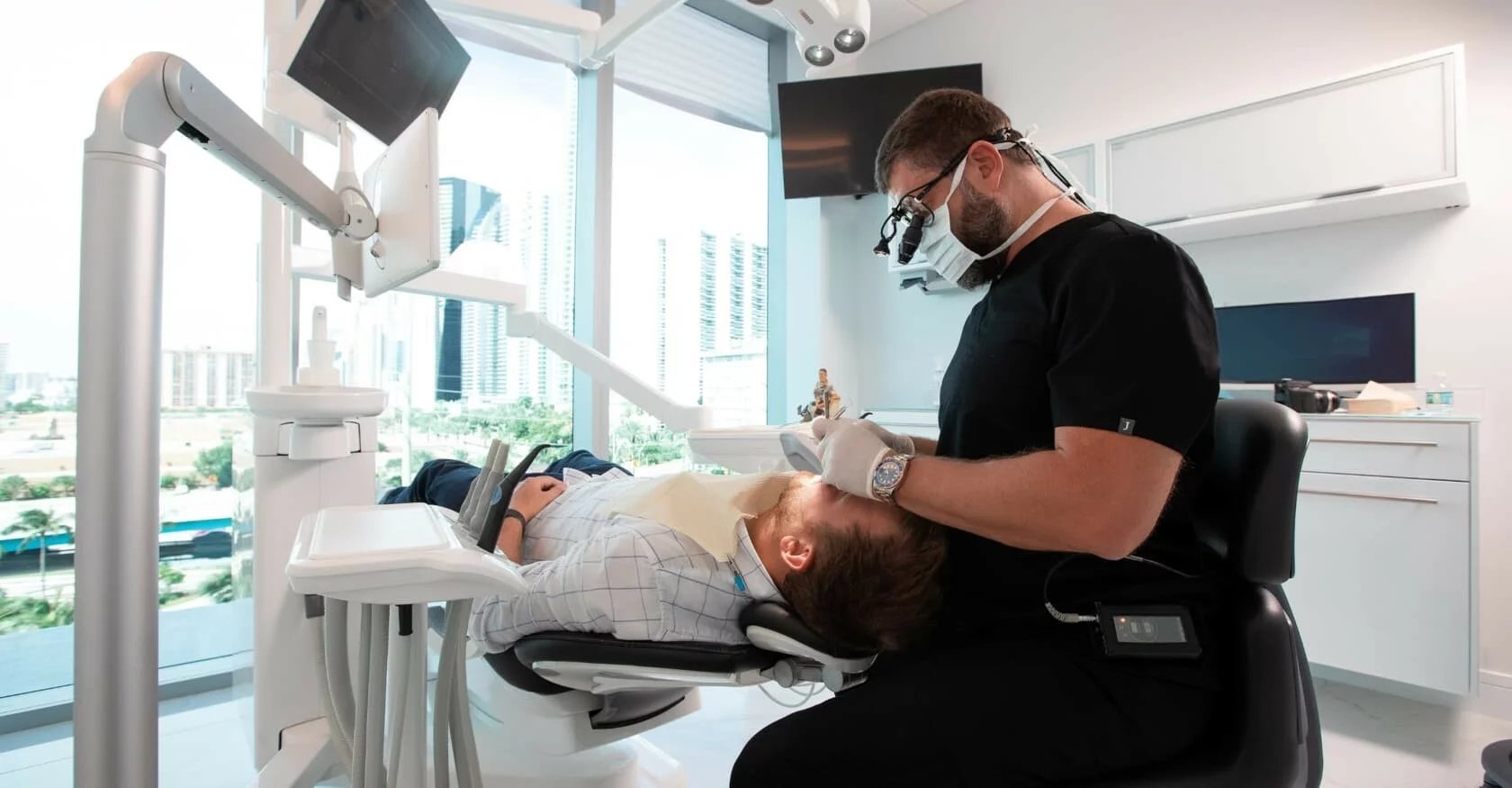
The examination comes first, by hand and by eye, and the history takes as long as it needs. When the examination calls for it, the functional records in part 10 are made in our office: K7 jaw tracking, surface EMG, sonography and low-frequency TENS. A CBCT scan is taken on the Planmeca Viso G7 in our office when a bone question needs it; MRI is by referral. The orthotic, the trial restorations and the definitive work are made by our laboratory in the same building, so a question about fit or material is answered across the hall rather than across town.
Care is collaborative when it should be. Physical therapy, pain medicine, sleep evaluation, an ear, nose and throat opinion, behavioural support or another specialist may be part of the plan, and we say so at the start rather than at the end. Treatment follows the order described in this guide: diagnosis, reversible care, and irreversible dentistry only when a tested position and a dental reason of its own call for it. Suite 701 in Sunny Isles Beach is where this is done; New York is by private, pre-scheduled appointment arranged through the Sunny Isles front desk.
Questions patients ask
Is my bite causing my jaw pain?
Sometimes, and it is never assumed. The neuromuscular view is that the bite decides where the jaw rests, so an unfavourable bite can keep muscles working at the wrong length; the broader literature cautions that the bite is not the usual cause of TMD and that changing it is not a routine treatment. Our answer is to measure the difference between where your teeth hold the jaw and where your muscles would rest it, test any proposed change with a reversible appliance, and change teeth only when the test is passed and the teeth need the work anyway.
Will a night guard fix it?
A standard night guard protects teeth from grinding and may ease symptoms; it is not built to a recorded jaw position and it is not the orthotic described in part 13. If you already have one, bring it. We will tell you what it is doing and what it is not.
Why does fitting the appliance take hours?
Because the appliance is adjusted to a relaxed jaw, and relaxing a jaw that has been guarding for years takes TENS and time. An appliance fitted in fifteen minutes is fitted to the old bite.
Do I need an MRI?
Only when the result would change what we do, which is usually when a locked or painful joint raises a question about the disc that the examination and the sounds cannot settle. CBCT, taken here, answers bone questions; it does not show the disc.
How long does treatment take?
The work-up takes several visits over a few weeks. The orthotic phase is usually reviewed at about three months. Anything permanent is planned after that, and its length depends on what it is. Some people stay in the appliance and need nothing more.
Is the TENS unit safe?
Low-frequency TENS has been used in this field for decades and Dr. Chan’s literature list runs to more than forty studies on it. It is not used with a pacemaker or certain other implanted devices, in pregnancy, or over an area of active disease, and the medical history is reviewed first.
Can the pain come back?
Yes. Muscles remember stress, injuries happen, and teeth wear. A tested position, an appliance kept for the nights that need it, and periodic review are how a result is maintained. Some people have a long-term condition that is managed rather than cured, and we say so when that is the honest answer.
I was told it is all stress. Is it?
Stress is part of it for almost everyone, because clenching tracks stress. It is rarely all of it. Stress does not displace a disc, shorten the back teeth or narrow an arch, and a measured jaw path shows the difference.
Will my medical insurance cover it?
Sometimes, in part, when a diagnosis and records are provided. Dr. Chan’s view that TMD is a medical disorder of the joints is set out in part 17. Our front desk provides the statements a claim needs; the contract is between you and your carrier, and coverage can differ from the fee.
When to call, and when to call 911
- Call 911 for trouble breathing or swallowing, swelling that is spreading fast with fever, a major injury to the face or jaw, or the sudden, severe headache or neurological symptoms that belong in an emergency room.
- Call 786-320-5445 during office hours for a jaw that will not open or close, new numbness of the face or lip, a click that has become a lock, or pain that is changing quickly.
- Request a visit for everything in this guide that is slower than that: pain that has lasted, a bite that feels wrong, headaches nobody has explained, or a child who breathes through the mouth.
Glossary
- Condyle
- The rounded head of the lower jaw that sits in the joint.
- Fossa
- The socket in the temporal bone of the skull that receives the condyle.
- Disc
- The fibrous cushion between condyle and fossa that rides with the jaw as it opens.
- Occlusion
- The way the teeth meet when the jaw closes and when it chews.
- Freeway space
- The small gap between the upper and lower teeth when the jaw hangs at rest.
- Centric relation
- The gnathologic reference position of the jaw, with the condyles seated up and back in the fossa.
- Neuromuscular position
- The jaw position found when the chewing muscles are relaxed and recorded, the reference position in neuromuscular dentistry.
- Orthotic
- A removable appliance, usually over the lower teeth, built to hold the jaw in a recorded rest position.
- Jaw tracking (CMS)
- Computerized mandibular scanning: a magnet and sensor array that record the jaw’s movement in three planes.
- EMG
- Electromyography: a recording of muscle electrical activity through skin electrodes.
- Sonography
- Recording and analysis of the vibrations a jaw joint makes as it moves.
- TENS
- Transcutaneous electrical nerve stimulation: here, a low-frequency pulse used to relax the jaw muscles.
- CBCT
- Cone-beam computed tomography: a three-dimensional dental X-ray of the bones.
- Functional jaw orthopedics
- Orthodontic treatment that guides jaw growth and posture, not only tooth position, in a child who is still growing.
- Myofascial pain
- Pain arising in muscle and its covering fascia, often felt at a distance from its source.
Sources and acknowledgement
The clinical reasoning in parts 03 to 17 is reworked, in our own words, from the published teaching of Dr. Clayton A. Chan, DDS, of Las Vegas, Nevada: a general dentist who has lectured and trained other dentists in neuromuscular diagnosis, musculoskeletal and facial pain, complex bite and restorative work and jaw orthopedics, and who is Dr. Tetri’s long-time teacher and friend. Dr. Chan has given his permission for the material on his site, drclaytonchan.com, to be used as the basis of this guide. Where a figure, a case or an opinion is his, the text says so. Photographs, scan images and the full citation lists remain on his pages. His site describes itself as educational opinion that does not create a doctor-patient relationship, and the same is true of this page.
- Clayton A. Chan, DDS. drclaytonchan.com: What is TMJ; How to treat it; The controversy; Pain sufferers; Key to TMJ success; Treatment protocol; What is neuromuscular dentistry; Toothaches and treatment options; The great debate; Functional orthodontics (What is it, Young patients, Protocol, Extractions, Case studies); Computerized instrumentation; Other diagnostic aids; The need for objective records; Confirming evidence; Supportive literature; Medical/legal; Considerations; Occlusion theories; Doctors only. Used with permission.
- Terrence O’Shaughnessy, DDS, orthodontist: essay on the chronic pain sufferer, presented on Dr. Chan’s site; and Loren Pilling, MD, of the early Mayo Clinic pain program, cited there.
- Bernard Jankelson and Robert R. Jankelson: the neuromuscular literature and instrumentation (Myotronics), including the foreword to Robert Jankelson’s textbook on neuromuscular diagnosis and treatment, posted on Dr. Chan’s site with permission.
- Research named in Dr. Chan’s pages: Linda LeResche on hormones and jaw-pain visits; Peter Waite on mitral valve prolapse; Jens C. Türp on pain beyond the jaw; Parker E. Mahan; C. J. DeLuca (1988) on surface electrodes; W. D. McCall (Quintessence, 1988) on EMG in symptomatic patients; the Burlington Growth Study; Lynn and others (1992) and Dean and others (1992) on EMG physiology and reliability; Bracco and others (1997) on sonography.
- Journal of the American Dental Association, November 1996: report on the acceptance of TMD devices by the ADA Council on Scientific Affairs, as cited by Dr. Chan.
- Masella v. Blue Cross & Blue Shield of Connecticut, United States Court of Appeals for the Second Circuit, 1991, as cited by Dr. Chan.
- National Institutes of Health and the National Institute of Dental and Craniofacial Research: descriptions of temporomandibular disorders, their prevalence, and the advice against irreversible bite-changing procedures as routine treatment.
- Diagnostic Criteria for Temporomandibular Disorders (DC/TMD): validated clinical and research criteria.